

Some cars push performance boundaries so far, they can’t be driven on public roads.
Regulations covering emissions, noise, safety, and homologation often block these machines from street use.
A few make rare appearances thanks to exceptions like the U.S. Show or Display law.
These mechanical marvels were designed with tracks, showcases, and collectors in mind, not commutes.
1. Aston Martin Vulcan

A 7.0L naturally aspirated V12 powers the Vulcan, unleashing 820 horsepower through a track-focused drivetrain.
Every detail, from the carbon fiber monocoque to the absence of headlights and turn signals, screams race car.
Designed exclusively for private track days, no effort was made to include road-legal components.
Only 24 units ever saw production, each requiring a special training program to drive.
Key Specs:
- 7.0L V12 engine
- 820 hp
- Carbon fiber body
- No road-legal features
- Production limited to 24
2. Ferrari 599XX
A stripped-down version of the 599 GTB Fiorano, the 599XX trades luxury for lap times.
Under its sculpted body sits a 6.0L V12 capable of 700 hp. Ferrari integrated F1-derived technologies including carbon fiber brakes, downforce-boosting aerodynamics, and active exhausts.
It lacks basic road equipment, making it a permanent resident of the track.
Key Specs:
- 6.0L V12 engine
- 700 hp
- Track-only F1 tech
- Advanced aero dynamics
- Non-compliant with road regulations
3. Bentley Mulliner Bacalar
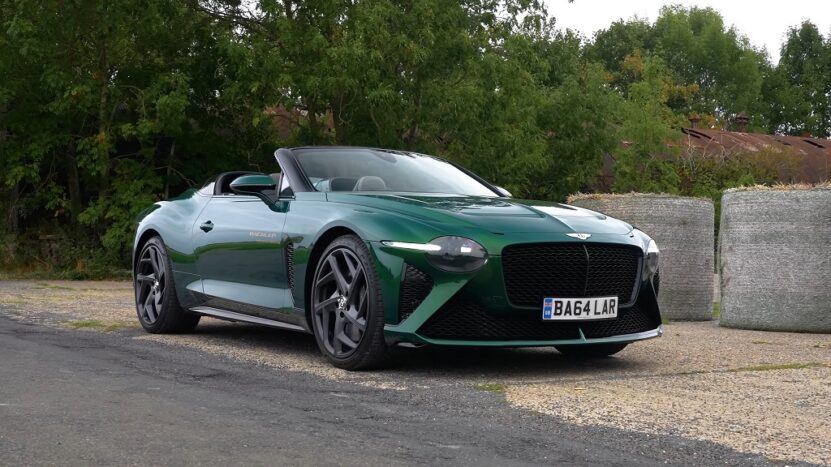
An ultra-luxury two-seater built by hand, the Bacalar features a 6.0L W12 and a nearly $2 million price tag.
With only 12 units made and no official U.S. homologation, owners rely on Show or Display exemptions for legal import.
Designed as a grand tourer for exclusive clientele, its place is in private collections and exhibits.
Key Specs:
- 6.0L W12 engine
- $1.9M base price
- Limited to 12 units
- No U.S. homologation
- Available via exemption laws only
These types of high-end, limited-run vehicles often require specialized handling and enclosed transport services to move between collections, showrooms, and events.
For instance, Houston Texas auto transport companies offer tailored shipping solutions for exotic, luxury, and non-road-legal cars, ensuring secure delivery for elite owners and collectors.
4. McLaren P1 GTR
The P1 GTR takes the standard P1’s hybrid V8 and adds intensity. With a combined output of 986 hp, it’s tailored for elite drivers in controlled environments.
The chassis underwent changes to increase stiffness, lower weight, and add racing-grade downforce.
Only buyers of the original P1 were offered access to this car and its track-driving program.
Key Specs:
- Twin-turbo V8 with electric motor
- 986 hp
- Built for track programs
- Upgraded aerodynamics and suspension
- Exclusively offered to P1 owners
5. Bugatti Bolide

A quad-turbocharged 8.0L W16 sits at the heart of the Bolide, delivering 1,578 hp.
Engineers prioritized power-to-weight ratio and minimal drag to push top speed above 310 mph.
Ground clearance, noise output, and minimal emission control made it impossible to approve for street use.
Key Specs:
- 8.0L W16 quad-turbo
- 1,578 hp
- Claimed speed: 310+ mph
- Insufficient ground clearance
- Not emission or noise compliant
6. Pagani Huayra R
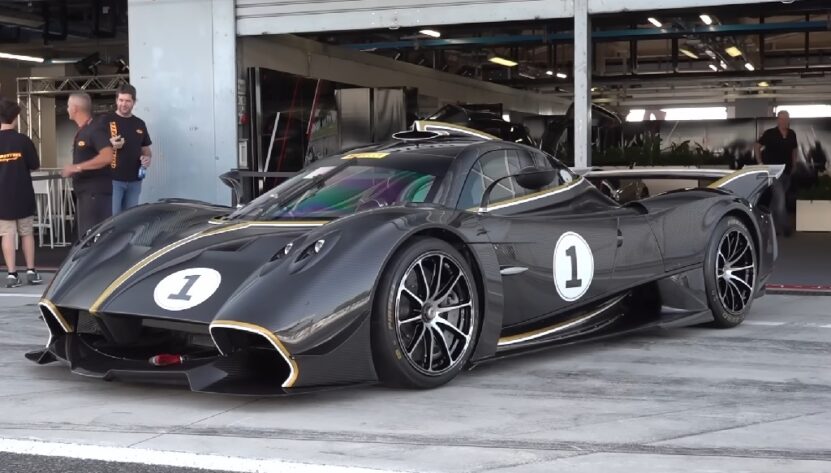
Built as the spiritual successor to the track-only Zonda R, the Pagani Huayra R rejects turbocharging in favor of an all-new naturally aspirated 6.0L V12.
Developed in partnership with HWA AG, the engine screams up to 9,000 rpm and delivers 838 hp with razor-sharp throttle response.
Rather than focusing on emissions regulations or city driving dynamics, the entire car was engineered to provide visceral, unfiltered performance at high-speed circuits.
Nothing about the Huayra R fits road use. Carbon monocoque construction keeps the weight under control while improving rigidity. Its aerodynamic package was sculpted for maximum downforce without any concern for everyday clearance.
A six-speed sequential gearbox replaces the standard transmission, emphasizing race-day precision over convenience.
Interiors strip away comfort and tech in favor of fire suppression systems, racing harnesses, and FIA-approved safety cages.
Key Specs:
- 6.0L V12
- 838 hp
- 30 examples produced
- Race-grade suspension and chassis
- No safety features for public roads
7. Lamborghini Sesto Elemento
Sesto Elemento, which translates to “Sixth Element” in honor of carbon’s atomic number, prioritizes weight savings over all else.
Constructed almost entirely from advanced carbon fiber composites, it weighs less than 1,000 kilograms, significantly lighter than most modern hatchbacks.
Its 5.2L V10, borrowed from the Gallardo Superleggera, delivers 570 hp without the burden of restrictive emissions or muffling hardware.
Acceleration is brutal, with 0–60 mph times estimated under 2.5 seconds. Absence of air conditioning, stereo systems, or sound insulation helps keep weight at a minimum.
Engineers removed creature comforts and added race-specific features such as quick-release fire extinguishers, carbon bucket seats, and stripped-down digital instrumentation.
The result is an experience that’s raw, deafening, and too aggressive for public infrastructure.
Key Specs:
- 5.2L V10
- 570 hp
- Sub-1,000 kg curb weight
- No emissions or noise controls
- Track-only limited production
8. Lotus Evija
Powered by four electric motors producing a combined 1,972 hp, the Evija ranks among the most powerful cars ever made.
Street legality was never a priority, with safety requirements like crash structures and airbags left out. Built for private test tracks and curated showings.
Key Specs:
- Quad-motor electric setup
- 1,972 hp
- No airbags or street safety tech
- Purely built for track display
- Futuristic design with radical aero
9. Lamborghini Strosek Diablo
Heavily modified by Strosek, this version of the Lamborghini Diablo exceeded federal crash standards and lacked structural safety enhancements.
Its design leaned toward style over compliance, and attempts to legalize it on U.S. roads were shut down by regulators.
Key Specs:
- Based on Diablo platform
- Extensive cosmetic and structural mods
- Non-compliant crash design
- Rejected by U.S. safety authorities
- Collector-only vehicle
10. TVR Sagaris
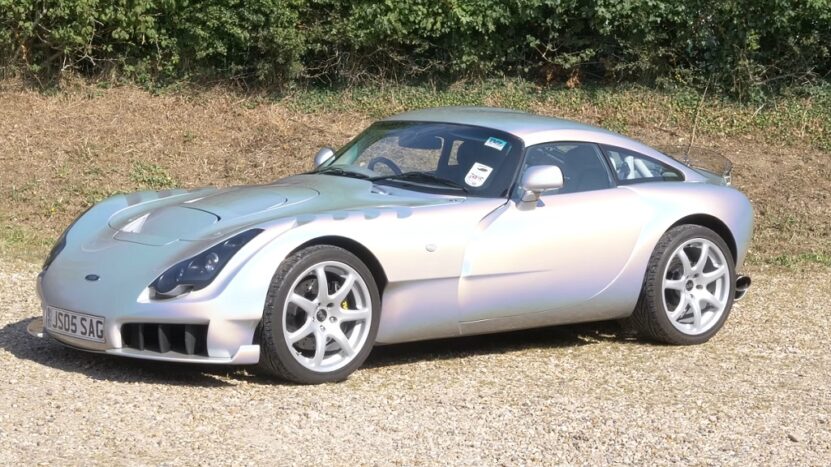
Raw, aggressive, and mechanical in every way, the Sagaris skipped modern tech like ABS and airbags.
Built to deliver visceral track experiences, it never passed emissions or crash regulations.
Known for being unforgiving yet thrilling, it lives on in garages and endurance race circuits.
Key Specs:
- No airbags or ABS
- Designed with endurance racing in mind
- Lightweight body and rear-drive layout
- Failed U.S. and EU safety checks
- Rare and enthusiast-focused
Summary
These machines represent extreme performance, design innovation, and a disregard for conventional limitations.
Street bans only heighten their mystique, turning them into coveted works of engineering.
Found at private circuits, elite car shows, and collectors’ garages, they reflect the friction between regulation and raw automotive ambition.