
Treat a car like an investment, and the numbers will eventually humble you. SUVs, in particular, are financial black holes dressed in steel and leather.
Between depreciation, insurance, maintenance, and fuel, even the most reliable model quietly eats into your bank account. The real question isn’t which SUV looks better in your driveway, but which one drains less from your wallet over time.
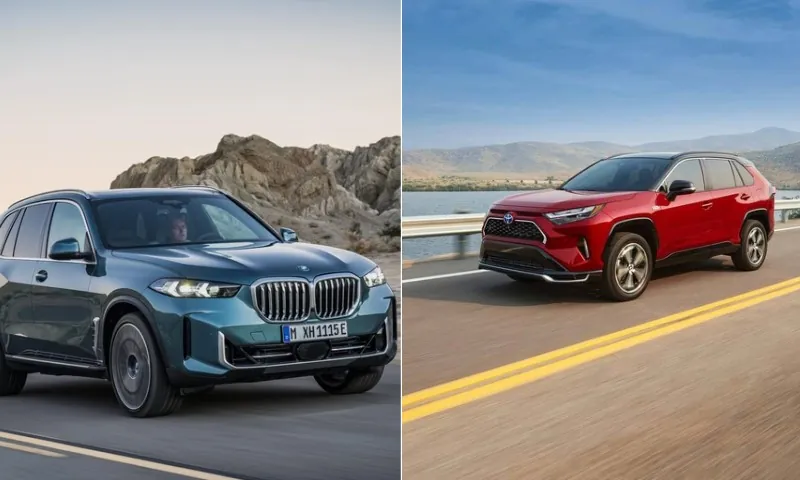
Here’s a look at how the 2025 BMW X5 and 2025 Toyota RAV4 perform both as new buys and as used investments.
How to Think About “Investment” With SUVs
Buying an SUV is not investing in the traditional sense. You’re not building wealth. You’re managing loss. What matters is how fast the vehicle loses value and how much it costs to own before you get rid of it.
When people talk about a “good automotive investment,” they usually mean:
- It depreciates slowly.
- It doesn’t bankrupt you with maintenance.
- It avoids catastrophic repair bills.
- It holds enough resale value to make the exit less painful.
Depreciation is the single biggest cost of vehicle ownership. iSeeCars analyzed more than 15 million vehicles and found that the average five-year depreciation used to hover near 50 percent.
After the pandemic and supply chain adjustments, that dropped closer to 38–40 percent. Luxury vehicles, however, rarely follow that improvement.
The BMW X5 and Toyota RAV4 are perfect examples of two entirely different financial realities.
BMW X5 vs Toyota RAV4 2025 at a Glance
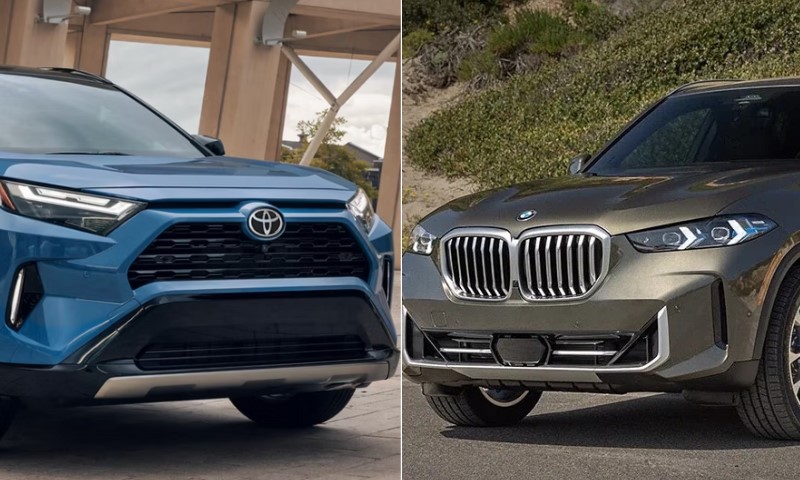
Here’s a quick snapshot of how the 2025 BMW X5 and Toyota RAV4 line up on price, performance, and value before getting into the details.
Segment and Pricing Overview
| Model | Segment | Base MSRP | Typical Range |
| BMW X5 (sDrive40i / xDrive40i) | Luxury midsize SUV | $67,475 | $67,000–$92,000 |
| Toyota RAV4 (gas / hybrid) | Compact SUV | $30,645 | $30,600–$40,000 |
The BMW X5 costs about double what the RAV4 does out of the gate. For some, that’s fine, as luxury carries a price. But from a financial standpoint, every extra dollar in that gap starts the clock on depreciation.
Key Metrics Side-by-Side
| Metric | BMW X5 sDrive40i / xDrive40i | Toyota RAV4 (Gas) | Toyota RAV4 Hybrid |
| Segment | Luxury midsize SUV | Compact SUV | Compact SUV (Hybrid) |
| Combined Fuel Economy | ~25 mpg | ~28–30 mpg | ~40 mpg |
| 5-Year Depreciation | ~56.1% | ~30.3% | ~30.1% |
| 5-Year Total Ownership Cost | $91,000–$94,000 | $37,000–$48,000 | Slightly higher upfront, lower fuel |
| 5-Year Resale Ranking | Not in KBB Top 10 | KBB Best Resale Top 10 (53.9% retained) | Recognized for hybrid residual strength |
The BMW gives you refinement, the Toyota gives you stability. One demands money, the other protects it.
Which SUV Is Kinder to Your Wallet in the First 5 Years?
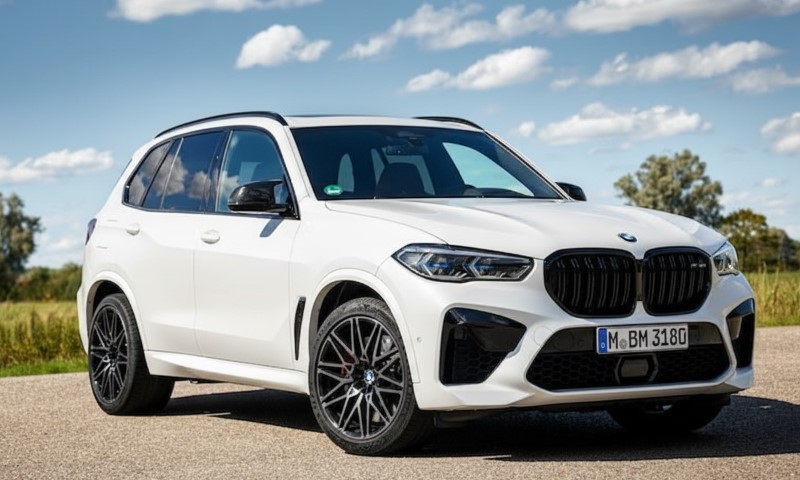
Buying new means taking the biggest hit on depreciation. The next five years reveal which SUV quietly drains your wallet faster.
Upfront Price Difference
The 2025 BMW X5 xDrive40i starts in the high $60,000 range and easily crosses $90,000 with options.
The 2025 Toyota RAV4 LE hovers around $30,000 depending on trim and region.
That’s a $30,000–$40,000 gap before you even fill the first tank. Financing or leasing amplifies the difference with higher interest charges and insurance.
Fuel Economy and Operating Costs
BMW X5:
- 23 mpg city / 27 mpg highway / 25 mpg combined
- Plug-in Hybrid (xDrive50e): 58 MPGe when using both gas and electric
- Premium fuel recommended, which drives up running costs
Toyota RAV4:
- Gas model: 28–30 mpg combined
- Hybrid: 40 mpg combined (EPA estimate)
- Regular unleaded fuel, far cheaper to feed
Even before considering depreciation, the RAV4 costs noticeably less per mile driven. According to Edmunds and CarEdge, by year five, fuel is among the top cost gaps between the two SUVs.
Real 5-Year Cost of Ownership
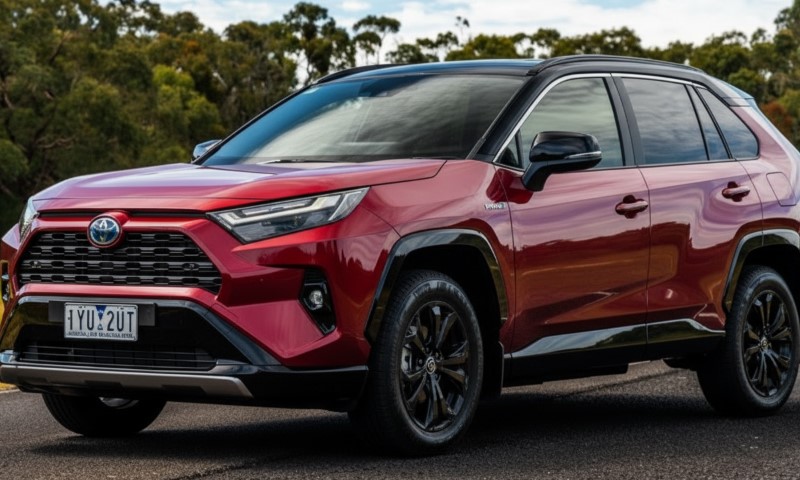
Numbers tell the truth faster than marketing does. Here’s what owning each SUV really costs after five years on the road.
BMW X5 sDrive40i
Edmunds data shows that the estimated 5-Year Cost is $91,826
| Category | Estimated Cost (USD) |
| Depreciation | $41,503 |
| Fuel | $11,180 |
| Insurance | $8,600+ |
| Maintenance | $10,235 |
| Repairs | $2,585 |
| Financing, Taxes, Fees | Remaining balance |
CarEdge’s estimate lands around $94,831, confirming a similar ownership curve.
Toyota RAV4 LE AWD
According to Edmunds, estimated 5-Year Cost is $37,871
| Category | Estimated Cost (USD) |
| Depreciation | $10,439 |
| Fuel | $7,438 |
| Insurance | $6,874 |
| Maintenance | $5,051 |
| Repairs | ~$800 |
CarEdge’s projections sit close: $35,894–$37,407 depending on trim.
In pure financial terms, you’ll likely spend $50,000 to $60,000 more owning a BMW X5 over five years compared to a Toyota RAV4. You get luxury, performance, and brand prestige, but your bank account gets thinner.
Depreciation and Resale
Depreciation and resale decide how much of your money survives ownership. Here’s what the real numbers reveal for both SUVs.
BMW X5 Depreciation Profile
Depreciation hits luxury vehicles hard. iSeeCars and CarEdge both list the BMW X5 near 56–59 percent depreciation over five years. That translates to roughly $38,000–$40,000 lost value in half a decade.
Example:
- Original MSRP: $67,000
- Value after 5 years: ~$29,000–$33,000
That’s a painful hit. The X5’s complexity, high maintenance costs, and niche buyer pool all accelerate depreciation.
Toyota RAV4 Resale Strength
The RAV4 is the opposite story. It consistently ranks among the top resale performers in the U.S.
- iSeeCars: 30.3 percent average depreciation after five years.
- KBB: Projects 9 percent of original value retained after five years, placing it in their 2025 Top 10.
- CarEdge: 28 percent depreciation, resale value around $27,000 after five years.
Example:
- Original MSRP: ~$30,000
- Value after 5 years: ~$20,000–$21,000
In dollars, the RAV4 loses roughly $9,000–$10,000, less than a quarter of what the X5 sheds.
Reliability, Warranty, and Ownership Risk
View this post on Instagram
Reliability separates a smart buy from a financial headache. Warranty coverage and repair risk reveal how each SUV treats its owner over time.
Brand-Level Reliability
Consumer Reports data repeatedly shows Toyota near the top for reliability and BMW closer to the middle.
- 2025 BMW X5: Above average reliability in standard trims; average in plug-in hybrid variants.
- 2025 Toyota RAV4: Strong reliability across both gas and hybrid versions.
Owners report fewer major issues with Toyotas over long-term ownership, and repair costs are lower when they do occur.
Recalls and Common Problems
- BMW X5 (2025 recall): Roughly 145,000 vehicles recalled due to starter motor defects with fire risk. Dealers replace the part free, but it’s a reminder of how luxury electronics multiply potential failure points.
- Toyota RAV4 (2025 recall): Around 1 million vehicles recalled over a backup camera glitch. Fixed via a free software update.
Older RAV4s once faced NHTSA investigations for fire risks from battery terminal shorts, but most were traced to aftermarket batteries or old components.
Out-of-Warranty Reality
The real financial damage begins when warranty coverage ends.
For the BMW X5:
- Maintenance + repairs easily exceed $10,000 within five years.
- Extended warranties or independent mechanics become essential to avoid $3,000+ repair surprises.
For the Toyota RAV4:
- Five-year maintenance + repair costs often stay under $7,000.
- Repairs are predictable, parts are cheap, and labor costs are low.
If you value predictability and hate financial surprises, the Toyota wins comfortably. The BMW might be enjoyable, but it’s also a gamble.
Safety and Everyday Functionality
Safety and everyday usability decide how an SUV fits real life. Both the X5 and RAV4 bring solid records, but with different priorities.
Crash Test Ratings
BMW X5 (2025):
- Earned IIHS Top Safety Pick+, the highest current standard.
- NHTSA data indicates strong protection scores across all categories.
Toyota RAV4 (2025):
- 5-star overall rating from NHTSA.
- “Good” ratings in most IIHS crash categories, though some side-impact scores were “Acceptable.”
- Did not make the 2025 IIHS Top Safety Pick list under the updated criteria.
Cabin Space and Driving Feel
- BMW X5: More spacious, more luxurious, and quieter at highway speeds. Excellent build quality, refined steering, and strong engine performance.
- Toyota RAV4: Practical layout, simple controls, durable interior materials, and plenty of cargo room. Less refined, but very livable.
If you measure investment partly by “quality of life,” the X5 undeniably feels premium. But from a financial perspective, you’re paying dearly for that daily comfort.
Used Market
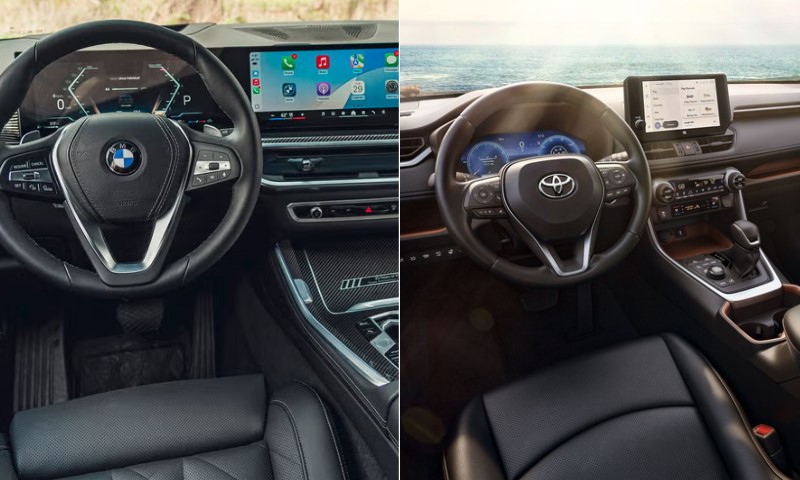
In the used market, the balance changes completely. The X5’s heavy depreciation becomes its selling point, while the RAV4’s value retention keeps prices firm.
Buying a Used BMW X5
Because the X5 depreciates rapidly, used models can look like a steal, on paper, that is.
A five-year-old X5 once priced around $67,000 may now sit between $28,000–$33,000 depending on mileage. You get:
- Luxury performance at a massive discount
- Comfort, technology, and road presence
- Powertrains that still outperform most new mainstream SUVs
But you also inherit:
- High maintenance costs
- Risk of expensive electronic or drivetrain repairs
- The possibility of air suspension or turbo issues
To make it worthwhile:
- Buy post-depreciation (3–5 years old).
- Get a full pre-purchase inspection.
- Consider a third-party extended warranty.
If you can budget around the upkeep, a used X5 can be a “luxury value hack.” But it’s not a rational investment, but a calculated indulgence.
For buyers comparing used SUVs side by side, browsing top-rated used cars Ipswich can offer a clearer sense of real-world pricing and condition before making a decision.
Buying a Used Toyota RAV4
@tomislavmikula Live Negotiation : Awkward Moment on a RAV4 #carbuyingtips #delivrd #newcar #dealership #carbuying #toyota
The used RAV4 is the definition of steady value. Because it holds price so well, you’ll pay more than you might expect for one, even with mileage.
What you get in return:
- Excellent reliability record
- Lower maintenance and repair costs
- High resale value if you sell again later
Used RAV4s can command strong prices, sometimes frustratingly high for bargain hunters. But that’s the price of owning a dependable, low-drama SUV that buyers line up for on the secondhand market.
From a financial perspective, a used RAV4 is almost the “cash equivalent” of SUVs, stable, predictable, and liquid when you need to resell.
Practical Ownership Scenarios
| Scenario | Better Choice | Why |
| Daily driver, minimal headaches | Toyota RAV4 | Low fuel cost, high reliability, easy resale |
| Luxury commuter, comfort prioritized | BMW X5 | Smooth ride, superior cabin, advanced features |
| Used luxury deal hunter | BMW X5 (3–5 years old) | Depreciation already absorbed |
| Long-term keeper (8–10 years) | Toyota RAV4 Hybrid | Minimal maintenance, slow value loss |
| Occasional driver, weekend trips | RAV4 | Less tied-up capital, lower idle costs |
Your financial “win” depends on how you use the SUV. The X5 can make sense as a used indulgence. The RAV4 makes sense as an all-around financial strategy.
Total Ownership Breakdown
| Factor | BMW X5 | Toyota RAV4 |
| Base Price | $67,000+ | $30,000+ |
| 5-Year Depreciation | 56% (~$38,000–$40,000 loss) | 30% (~$9,000–$10,000 loss) |
| 5-Year Fuel Cost | ~$11,000 | ~$7,000 |
| 5-Year Maintenance & Repairs | ~$12,800 | ~$5,800 |
| Resale Value After 5 Years | ~$29,000–$33,000 | ~$20,000–$21,000 |
| Reliability Rating | Above average (improving) | Excellent |
| Safety | IIHS Top Safety Pick+ | NHTSA 5-Star |
| Ownership Satisfaction | High (luxury feel) | High (practicality & efficiency) |
The numbers draw a clear map: you spend less, lose less, and worry less with the RAV4.
The Verdict
When you strip away badges and emotion, the math is clear.
- As a new purchase: The Toyota RAV4 dominates. Lower price, higher resale, smaller fuel bill, and stronger reliability make it the obvious financial winner.
- As a used purchase: The BMW X5 becomes interesting once it’s five years old and already heavily depreciated. If you budget for upkeep and buy smart, it can deliver luxury for the price of a new compact SUV.
- As a long-term asset: The RAV4 remains the safe play. Predictable, steady, and unlikely to surprise you with $4,000 repair invoices.
The BMW X5 is an excellent vehicle in isolation: refined, quick, and satisfying. But from a financial lens, it’s an indulgence.
The Toyota RAV4, especially in hybrid form, is a quiet financial strategist on wheels. It keeps value, saves fuel, and resells fast.
If the goal is wealth retention rather than weekend thrills, the scoreboard is simple:
Winner: Toyota RAV4 (New or Used)
It costs less to buy, less to own, and less to regret.