
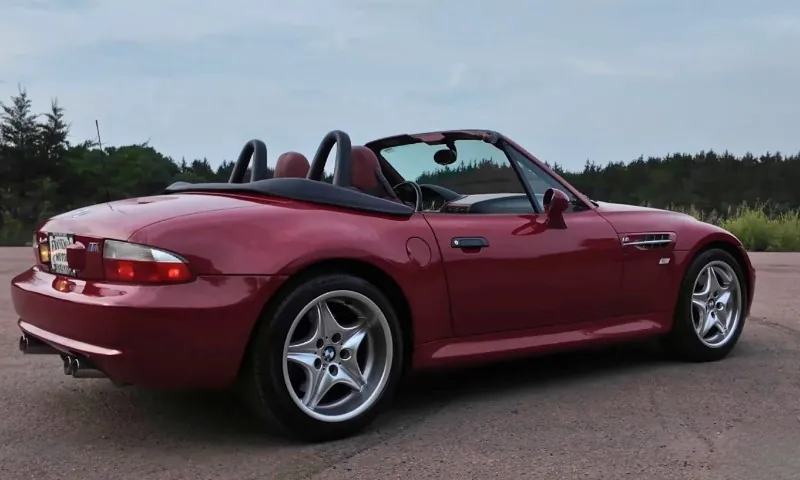
The BMW Z3 M Roadster arrived in 1997 as a bold statement of intent, pairing classic roadster proportions with uncompromising M Division hardware.
Attention often shifted toward M3 and M5 models, leaving this compact roadster operating quietly in their shadow for years.
Market perception has shifted as rarity, aggressive character, and an unfiltered driving experience gain stronger appreciation.
Recognition now grows as collectors and enthusiasts reassess its place in BMW history.
Buying Guide and Ownership Considerations
View this post on Instagram
Market activity during 2025 and 2026 reflects renewed interest and tightening supply.
Pricing varies widely based on condition, mileage, and engine specification, creating multiple entry points for buyers.
Clear value separation exists between early and late production cars.
Current pricing trends define the ownership entry point:
- 1998 to 2000 S52-powered models in good condition, around $19,000
- 2001 to 2002 S54-powered models were typically priced between $25,000 and $30,000 or higher
- High-mileage or neglected examples occasionally available for below $10,000
Mechanical durability remains a strong advantage. S52 and S54 engines share proven architecture with contemporary 3 Series models, keeping parts availability strong.
Preventive maintenance remains essential, particularly addressing oil leaks, plastic cooling components, and timing chain wear.
Common issues with BMW VANOS repair, especially for S52 and S54 engines, should be anticipated, as aging seals and solenoids can impact performance and drivability.
Cooling system failures often appear near one hundred thousand miles, affecting radiators, hoses, and thermostats.
Structural inspection focuses heavily on rear subframe mounting points, with reinforcement solutions such as the Randy Forbes kit available at high cost.
Ownership support benefits greatly due to active BMW Car Club of America involvement, dedicated enthusiast forums, and a wide aftermarket supported by shared E36 components.
Exterior and Design Details
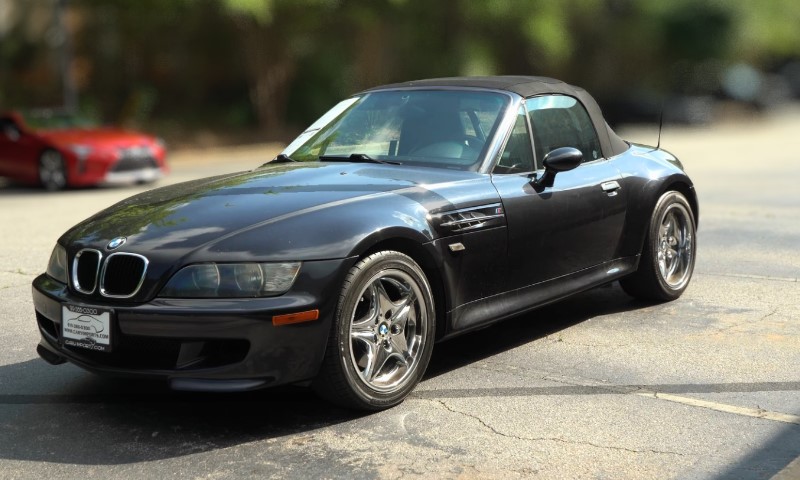
Design roots trace back to the standard Z3, yet visual attitude shifts noticeably through M-focused changes that alter stance and intent without overwhelming the original shape.
Proportions feel tighter and more aggressive, especially viewed at the rear, where additional width gives the car a muscular posture on the road.
Several measurable changes define that transformation and set the M Roadster apart at a glance:
- Rear track width increases by 86 mm compared to four-cylinder Z3 models, improving visual balance and rear-end stability
- Quad exhaust tips remain exclusive to the M Roadster and serve as an immediate identifier
- Staggered 17-inch M alloy wheels use 225/45R17 tires up front and 245/40R17 tires at the rear
Front-end design plays a functional role rather than focusing purely on aesthetics.
Larger air intakes feed cooling systems and contribute to added aerodynamic stability at speed. M-style side mirrors reduce drag while reinforcing motorsport identity.
White indicator lenses and distinctive side gills reference the BMW 507, tying modern aggression to classic inspiration.
Design direction under Joji Nagashima preserved the clean roadster silhouette, opting for a sport-focused progression that avoids visual excess and protects long-term visual relevance.
Engine and Performance
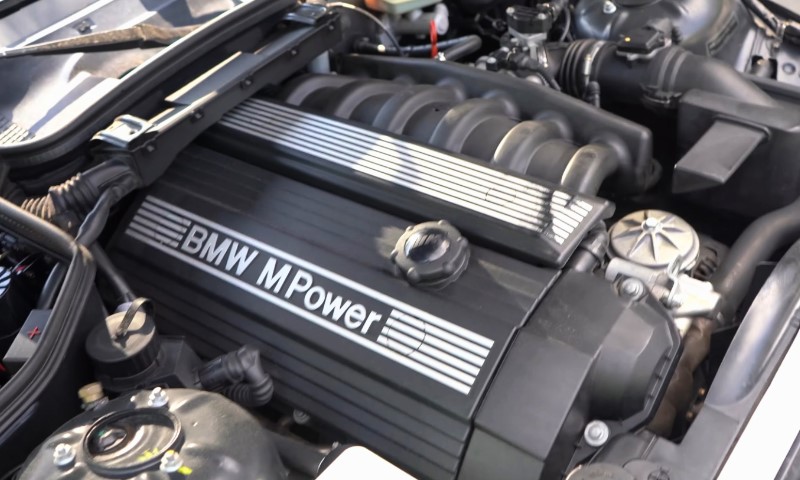
Power delivery defines the M Roadster experience, and changes across the production run altered personality significantly.
Early models favored accessible torque and smooth delivery, while later versions introduced a more aggressive, high-revving character tied directly to BMW’s flagship performance coupe of the era.
Each configuration carries clear mechanical credentials that translate into strong straight-line performance.
Performance figures and specifications clarify those differences:
- S52 engine in U.S. models built between 1998 and 2000
- 2-liter inline six
- 240 horsepower and 236 lb-ft of torque
- 0 to 60 mph in approximately 5.4 seconds
S54 engine in 2001 and 2002 models for the U.S. and Europe:
- 2-liter inline six shared with E46 M3
- 315 horsepower in U.S. specification
- 325 horsepower in European specification
- 258 lb-ft of torque in EU models
Transmission selection remained intentionally limited.
Five-speed manual operation reinforces mechanical involvement and removes any electronic filtering between driver input and drivetrain response.
Top speed carries an electronic limit set at 155 mph. Curb weight remains close to 3,080 pounds, allowing power delivery to feel immediate and responsive by late 1990s standards.
Rear-wheel drive paired with a mechanical, limited-slip differential encourages controlled oversteer and rewards precise throttle modulation.
Chassis, Suspension, and Driving Dynamics
Chassis engineering combines proven BMW performance components with compromises dictated by the Z3 platform.
Front suspension design mirrors the E36 M3, using independent McPherson struts and compound brake discs that deliver confident stopping power and predictable steering response.
Rear suspension relies on a semi-trailing arm layout modified specifically for the shorter Z3 chassis, balancing packaging limitations with performance intent.
Ride height changes and hardware choices shape handling character in measurable ways:
- Suspension sits 10 mm lower than standard Z3 models
- Limited-slip differential included as standard equipment
- Hydraulic steering system avoids electronic intervention
Driving feel remains raw and communicative, though structural limitations surface with age and mileage.
Rear subframe mount point cracking presents a well-documented concern, particularly on M variants, and inspection becomes essential during any purchase evaluation.
Overall rigidity falls short of modern roadsters, and worn bushings or compromised mounting points can introduce unwanted movement.
Braking performance continues to earn praise, and steering feedback remains a defining strength thanks to its hydraulic design.
Interior and Features
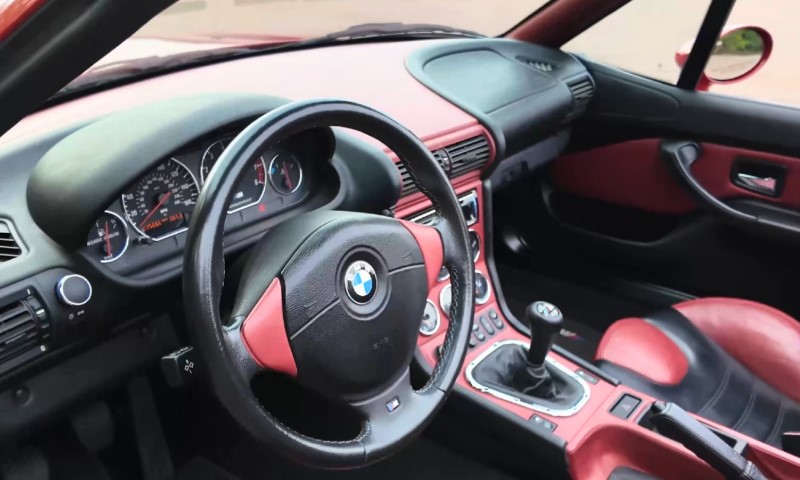
Cabin layout follows the familiar Z3 template while adding performance-focused details that reinforce driver involvement.
Materials and ergonomics reflect late 1990s BMW priorities, favoring function and clarity over digital interfaces. Instrumentation provides additional information not found in standard Z3 models, reinforcing its performance role.
Key interior elements shape daily usability and driving engagement:
- Chrome-ringed gauges, including oil temperature and outside temperature readouts
- Optional two-tone dashboard configuration
- Heated sport seatsare included as standard equipment
Driver interface centers around an M three-spoke steering wheel and a short-throw shifter connected to the five-speed manual gearbox.
Convertible soft top operates with power assistance, maintaining convenience without added complexity. Interior dimensions feel tight, especially for drivers taller than six feet two inches, with limited legroom and head clearance.
Age-related issues remain common, including sagging gloveboxes, cloudy headlight lenses, and occasional electrical faults.
Convertible top leaks can allow moisture intrusion, sometimes leading to yaw sensor failure that carries a replacement cost of nearly one thousand dollars.
The Verdict
BMW Z3 M Roadster delivers classic roadster proportions paired with raw mechanical performance and unmistakable M Division character.
Years of relative obscurity have ended as enthusiasts reassess its value and driving purity.
Pricing remains approachable, especially for S52-equipped cars, offering an attainable entry point into high-performance BMW ownership.
Rising market interest and limited production ensure long-term desirability, positioning the Z3 M Roadster as a smart purchase that still offers exceptional value today.