
Car weight sounds like such a basic number on a spec sheet. But if you’ve ever lugged a heavy suitcase up stairs, you already know the truth hiding in the numbers: mass changes everything.
For cars, it’s not just about how sluggish or quick they feel. Weight determines how much energy it takes to move, how long your tires last, and how confidently you can stop when traffic suddenly grinds to a halt.
Add mass, and every system in the vehicle works harder. Shed it, and life gets easier for fuel, rubber, and brakes alike.
Let’s go step by step through the science, the data, and the practical advice drivers can actually use.
Key Points
- Extra weight makes cars burn more fuel or electricity, wear out tires faster, and strain brakes harder.
- Every 100 pounds can cut fuel economy by about 1 percent, according to DOE guidance.
- EVs are heavier and often see quicker tire wear and shorter range, even with regenerative braking.
- Drivers can save money and improve safety by packing lighter, checking tire pressure, and choosing the right tires or battery size.
The Core Physics in Plain Language

Every time a car speeds up, it stores kinetic energy: Kinetic energy = 0.5 × mass × speed². That formula is simple but powerful.
A heavier car at the same speed carries more energy, which means:
- The engine or battery has to work harder to get it there.
- The brakes have to dump more heat when slowing down.
- The tires carry more load every single mile.
Rolling resistance also grows with weight. Tires pressed harder into the road deform more, which means more wasted energy as heat.
The Environmental Protection Agency sums it up clearly: heavier vehicles require more energy to move, whether that energy comes from fuel or electricity.
What Extra Mass Does to MPG and kWh per Mile
Every extra pound your car carries shows up at the pump or on your EV’s range display.
Let’s look at how added mass quietly trims mpg and raises energy use.
The Real-World Rule of Thumb
The U.S. Department of Energy’s guidance has long been quoted: every extra 100 pounds can cut fuel economy by about 1 percent.
The effect is larger in smaller cars because the added weight makes up a bigger share of total mass.
The EPA’s annual Automotive Trends report backs up the same bottom line: more weight means lower mpg and higher CO₂ for combustion cars, and higher kWh-per-mile for EVs.
Quantified Benefits from Losing Weight
Simulation work from the National Renewable Energy Laboratory (NREL) puts numbers to the theory.
In one study, removing 150 kilograms from a conventional vehicle cut fuel use by about 0.58 liters per 100 km.
Over a car’s lifetime, that adds up to a real difference in emissions and fuel bills.
NREL continues to highlight lightweighting as one of the clearest engineering levers to reduce energy consumption, though material cost is the big hurdle.
Why EVs Aren’t Exempt
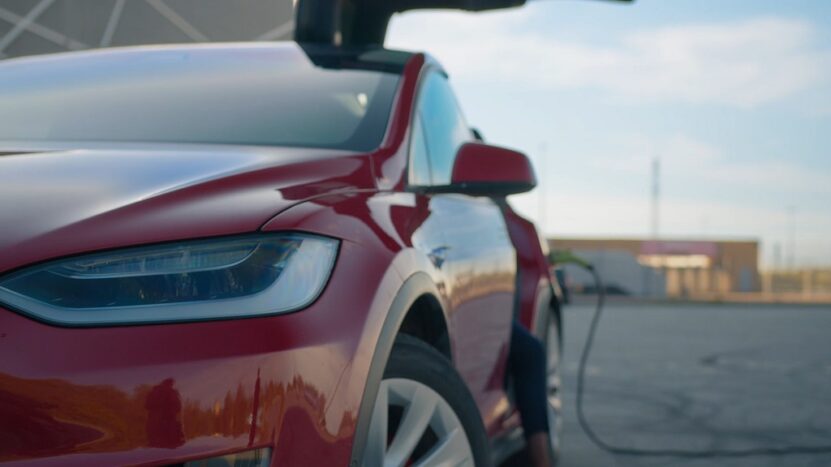
Even with regenerative braking, EVs play by the same physics. Heavier EVs consume more electricity per mile. The EPA notes that weight still shortens range, even if no tailpipe emissions result.
The International Council on Clean Transportation has pointed out a specific trap: oversizing a battery.
Yes, a bigger pack reduces charging stops on long trips, but the added mass raises energy use every single day. That extra weight also increases the total cost of ownership.
Quick Cheat-Sheet on Weight and Efficiency
| Scenario | Typical Effect | Why It Happens |
| Add ~45 kg cargo | Around 0.5-1% lower mpg | More inertia and higher rolling resistance |
| Remove ~150 kg | About 0.58 L/100 km fuel saved (case study) | Less mass to accelerate, less tire deflection |
| Upsize EV battery | Higher kWh/mile | Bigger battery = more weight to haul |
What Drivers Can Do Right Now
- Travel light. Remove gear you don’t need. That 1 percent per 100 pounds rule is real.
- Pick efficient tires. Low rolling resistance designs help offset mass. Consumer Reports frequently tests options for EVs and hybrids.
- Think about wheel size. Larger wheels add unsprung mass and wider tires raise resistance.
- Choose the right battery size. For EVs, more range isn’t always smarter. A mid-size pack often balances cost, weight, and daily usability.
Tire Wear & Why Heavier Vehicles Eat Rubber Faster
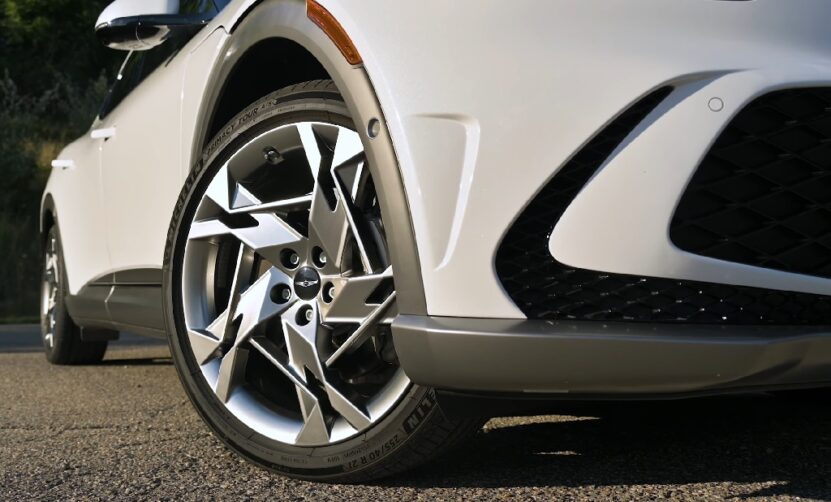
More weight doesn’t just cost you extra fuel, it grinds away at your tires, too. The heavier the car, the harder the tread works with every turn of the wheel.
How Weight Becomes Wear
Every revolution of a tire involves flexing rubber against pavement. More vertical load means more deformation, which increases energy lost as heat and accelerates tread loss.
Laboratory studies consistently show that heavier loads speed up wear and particle emissions.
Some test conditions suggest wear can even scale close to the third power of load – meaning small increases in weight can multiply the wear rate dramatically.
The EV Twist
Electric cars are often singled out for fast tire wear. J.D. Power’s 2024 survey of over 31,000 owners found EV drivers reported lower satisfaction with tire life.
Two culprits: heavier curb weights and instant torque. Consumer Reports also notes that EV owners should keep a closer eye on tread depth and choose tires built with reinforced construction.
But It’s Not Just EVs
Gas and hybrid cars carrying heavy cargo or towing trailers see the same effect. A 2023 lab study confirmed that particulate emissions and wear rose with load, regardless of tire type.
Practical Ways to Extend Tire Life
- Inflation pressure is critical. Under-inflation amplifies wear, especially in heavy vehicles. Always check pressures cold.
- Rotate on time. Heavy, high-torque vehicles exaggerate uneven wear. Stick to the shortest rotation interval in the manual.
- Drive smoothly. Hard braking, aggressive acceleration, and high speed all raise wear.
- Pick the right compound. Some tires sacrifice a little efficiency for much better durability. Independent tests are worth checking, especially if you need even more robust load or off-road capabilities. For example, you might explore Hubtrac products for truck-grade durability under heavy usage.
Braking – More Mass, More Heat to Manage

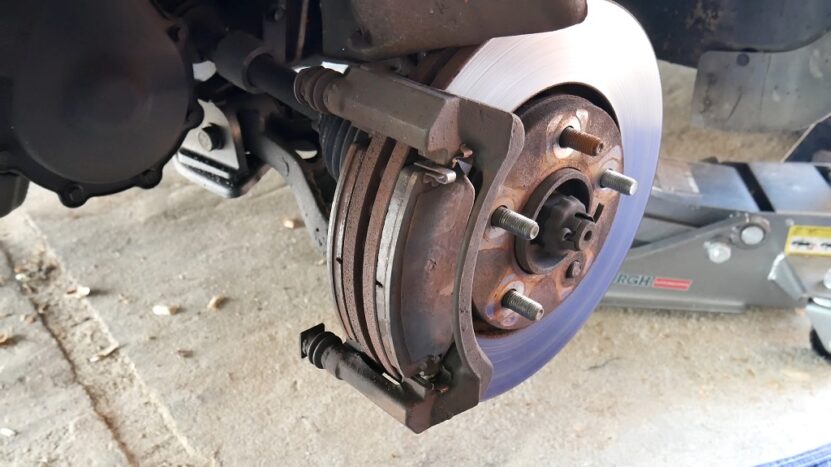
Brakes don’t get a free pass when cars get heavier. More weight means more energy to shed, and that extra load turns directly into heat every time you stop.
The Physics at Work
In theory, stopping distance on dry pavement depends mostly on speed and tire grip, not mass. But in practice, more weight means more energy converted to heat in the brake system.
Heavy vehicles can overheat pads and rotors faster, which lengthens stopping distances.
Researchers warn that as very heavy EVs and SUVs hit the road, safety risks increase for pedestrians and smaller vehicles around them.
What Regulations Require
In the U.S., every light vehicle must pass Federal Motor Vehicle Safety Standard No. 135. That includes repeated stops at full gross vehicle weight rating, ensuring acceptable performance under load.
ABS and brake assist are standard, and automatic emergency braking is now required in many new vehicles, which helps compensate for late driver reactions.
What Weight Means for Daily Driving
- Leave bigger gaps when loaded. Your brakes are working harder, and fade builds faster on long descents.
- Use engine braking. Lower gears on gas cars or regen on EVs help shed energy without overheating brakes.
- Check tire load index. If your real-world use involves towing or heavy loads, make sure your tires are rated for it.
How Automakers Manage Mass
Automakers fight back against weight with engineering.
- Lightweight materials. Advanced high-strength steel, aluminum, and composites cut weight without shrinking cabins.
- Bigger brakes and smarter controls. Cooling channels, larger rotors, and coordinated regen keep stopping power consistent.
- Battery right-sizing. ICCT analysis shows moderate packs often give the best balance of cost, energy use, and mass.
Buying and Setup Tips That Factor in Weight
- Compare curb weights when shopping. Lighter trims usually mean better efficiency and lower tire costs.
- If towing or hauling, upgrade tires. A higher load index gives you grip and heat resilience.
- Check tire labels for EV load ratings. Many new models are built to withstand high torque and mass.
- Stay disciplined about maintenance. Heavier cars punish skipped rotations or ignored pressures more severely.
Clearing Up Common Myths
- “EV weight doesn’t matter because regen gets it back.” Regen helps, but it can’t capture all energy. Physics still demands more electricity to move a heavier car.
- “Heavier cars stop just as quickly on dry pavement.” On paper, yes. In reality, brake systems and tires have limits, and extra kinetic energy always makes their job harder.
The Bottom Line
Weight is not just a number in a brochure. It’s a central factor shaping efficiency, tire costs, and safety margins. For drivers, that means packing lighter, checking tire pressures, and being mindful of wheel and battery choices.
For buyers, it means weighing curb weight as seriously as horsepower or screen size. And for automakers and regulators, it’s about continuing the push for lighter materials, robust braking at full load, and clear consumer information.
If one rule sticks, let it be this: every 100 pounds matters. Over the life of a vehicle, those pounds decide how much fuel you burn, how many sets of tires you buy, and how confidently you can stop when it matters most.