
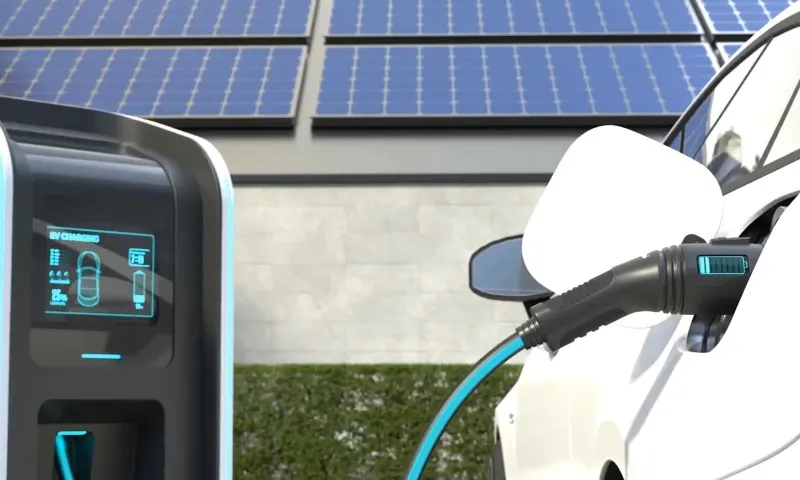
Solar-powered EV charging in 2025 has finally become a mainstream option. It’s no longer a quirky project for early adopters. Prices for solar panels have steadied, EV ownership has soared, and bidirectional charging systems are finally shipping in real volumes.
What that means is simple: homeowners, fleet operators, and municipalities now have real choices, integrated systems that work, perform well, and come from companies that will still be around five years from now.
Below is a breakdown of the best solar EV charging systems available in 2025, the technology that makes them work, and the real numbers behind their performance and cost.
What Counts as a “Solar EV Charging System” in 2025
A real solar EV charging setup in 2025 is more than just plugging a car into a wall outlet powered by panels. It’s a five-part system built to balance production, consumption, and storage efficiently:
PV Array or Solar Carport
A rooftop or carport system must generate at least 1.5 kW of surplus solar power to begin solar-only charging. UK field tests in 2025 found 1.44 kW to be the minimum to sustain consistent charging.
Smart or Solar-Aware EVSE
The charger must communicate with the solar inverter to throttle charging up or down, using grid support when sunlight dips.
Battery or EV as Battery
A stationary battery (like Tesla’s Powerwall 3 or SunPower’s SunVault) or bidirectional EV charger allows energy to flow both ways, charging the car or powering the home when needed.
Control Software
Modern systems integrate all components through an app that schedules charging, adjusts for electricity tariffs, and complies with ISO 15118 communication standards for vehicle-to-home (V2H) or vehicle-to-grid (V2G).
Permitting and Interconnection
Systems must be registered and approved under local interconnection rules (such as AFIR in the EU) and utility export permissions in the U.S. to handle bidirectional energy safely.
How Many Panels Does an EV Need?
An average driver in the U.S. or Europe travels between 10,000 and 14,000 miles per year. That translates to 3,000–4,500 kWh of annual electricity demand for an electric car.
To cover that purely through solar, you’ll need roughly 7 to 12 modern 400 W panels, or a 3–5 kW solar array.
Example Setup
| Component | Power Size | Annual Output (kWh) | Covers Miles/Year |
| 4 kW PV array | 10 panels @ 400 W | ~5,600 | ~13,000 miles |
| 5 kW PV carport | 12–13 panels | ~7,000 | ~16,000 miles |
For smaller households or those commuting on electric bikes instead of full-size cars, even a compact 2 kW array can supply enough power for daily travel.
A residential solar carport in 2025 costs around $3.17 per watt, putting a 5 kW structure near $16,000 before incentives.
Many homeowners now choose bundled packages (solar + battery + EVSE) since they qualify for the U.S. federal 30% tax credit.
Residential Tier
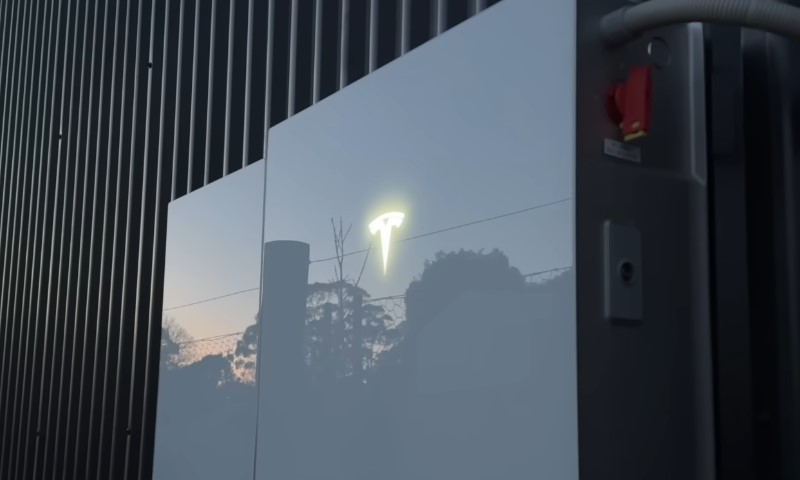
1. Tesla Solar + Powerwall 3 + Wall Connector
Tesla remains the only brand in North America offering a complete package—solar panels, integrated battery storage, and a native EV charger—under one ecosystem. The Powerwall 3 introduced direct DC coupling, minimizing conversion losses.
- Direct DC link between solar and battery improves system efficiency.
- Tesla software automatically directs solar surplus to charge the car when it’s home.
- Powerwall 3 pricing dropped to about $1,140 per kWh, making storage viable again.
- NACS (North American Charging Standard) simplifies setup for Tesla owners.
- True V2H (vehicle-to-home) from Tesla cars still awaits regulatory and hardware approval in some markets.
- Tesla solar roof pricing remains higher than third-party panels, extending payback time.
Best for: Homeowners already in the Tesla ecosystem who value silent operation, integrated control, and energy backup during outages.
2. SunPower Equinox + SunVault + Third-Party Charger
SunPower continues as the top premium option in 2025. Its Equinox solar platform and SunVault battery come in 13, 26, 39, or even 52 kWh configurations—ideal for homes with one or two EVs.
Owners typically pair SunPower with Wallbox Pulsar/Quasar, ChargePoint Home Flex, or MyEnergi Zappi, as all support surplus-only charging via current transformers (CT clamps).
- Industry-leading panel efficiency (22%+).
- Flexible storage sizes for dual-EV households.
- Excellent warranty and U.S. support base.
Best for: Homeowners prioritizing efficiency, long warranties, and the freedom to choose their preferred charger.
3. Enphase Energy System with IQ EV Charger
Enphase unified its microinverters, IQ batteries, and IQ EV Charger under one app in 2025, creating a fully synchronized solar ecosystem. Users can select “solar-only,” “solar + grid,” or “off-peak” charging modes directly in the app.
- Microinverters ensure each panel performs independently under shade or dirt.
- Single interface for solar, storage, and EV.
- Strong installer network in North America and Europe.
Best for: Homes already equipped with Enphase microinverters or users seeking high visibility over each energy flow.
4. MyEnergi Zappi (v3 and GLO)
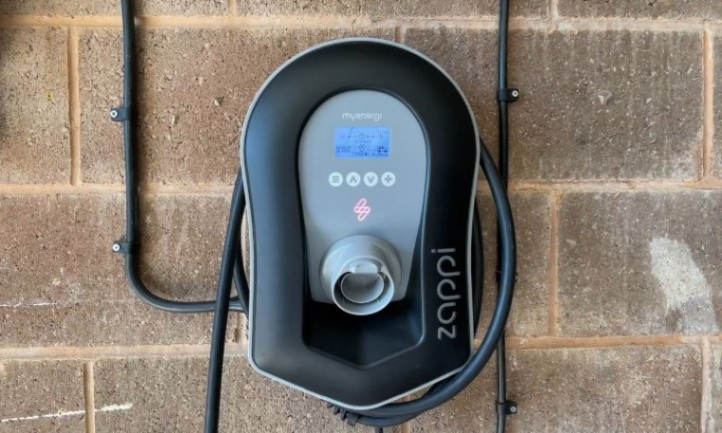
The MyEnergi Zappi remains the most trusted solar EV charger in 2025. Designed from day one to use surplus PV or even wind energy, it can charge entirely from solar when household loads are low.
- Solar-first logic built in, no battery needed.
- “Eco+” mode automatically pauses charging when clouds cut solar output.
- Three-phase and single-phase models available.
- Compatible with most PV inverters worldwide.
When paired with a typical 4–6 kW rooftop system, Zappi can deliver thousands of solar-powered miles annually, often at less than 2 cents per mile.
Best for: Homeowners who already have solar and want the simplest way to make use of surplus energy.
5. Wallbox Pulsar Max and Quasar 2
Wallbox now runs two strong product lines for solar EV users:
- Pulsar Max: Compact AC smart charger with solar integration via power meters.
- Quasar 2: A 12.48 kW DC bidirectional charger supporting vehicle-to-home (V2H) and vehicle-to-grid (V2G) functions under ISO 15118-20.
The Quasar 2 became the officially supported bidirectional charger for the Kia EV9 in the U.S., letting drivers charge during the day from solar and run their homes from the car at night.
Best for: High-capacity homes with 200A panels that want bidirectional energy use without buying a large stationary battery.
6. ChargePoint Home Flex / Flex Plus
ChargePoint’s Home Flex and Flex Plus series integrate smoothly with home solar and energy management platforms. Power output ranges from 50A (Flex) up to 90A (Flex Plus), ensuring fast top-ups even under mixed solar-grid input.
Drivers benefit from having a single app for both public and home charging—a major convenience for fleets or employees using company EVs.
Best for: Users who value network familiarity and advanced smart scheduling tied to real-world tariffs.
Commercial and Off-Grid Systems in 2025
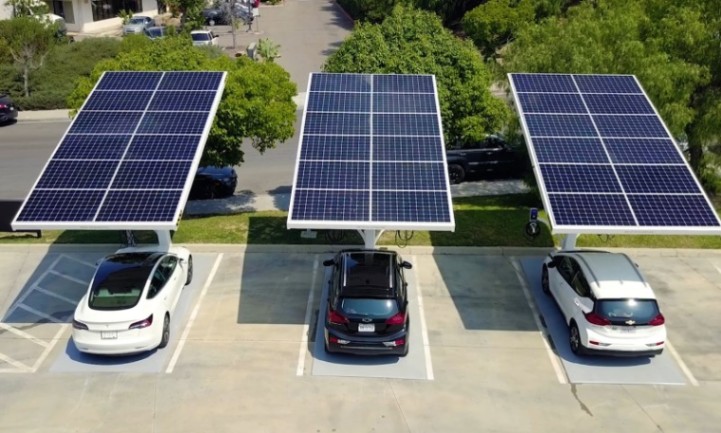
Not every solar EV setup connects to the grid. In 2025, several robust off-grid and commercial solutions serve parking lots, event spaces, and municipal projects.
1. Beam Global EV ARC
Beam Global’s EV ARC remains the fastest-deploying solar charging station. It combines a solar canopy, battery, inverter, and Level 2 or DC fast charger on one movable skid. No trenching, no permits in many jurisdictions, and it can be relocated if needed.
- Fully self-contained, off-grid operation.
- Deploys within hours.
- Zero demand charges or trenching costs.
- Now available in both North American and European configurations.
Ideal for: City fleets, rural depots, or coastal properties where electrical infrastructure is limited.
2. Solar Carports and Canopies
By 2025, solar carports have reached cost maturity, averaging $3.17 per watt in the U.S. for residential or small commercial installs. Most integrate cable management and embedded EVSE conduits. Some even include small batteries housed in rear columns.
At scale, one mid-size commercial carport can generate over 300,000 kWh annually, like Shell’s 2025 Recharge hub in Shenzhen.
- Provides shade and visible sustainability statement.
- Reduces building cooling load.
- Serves both public and employee charging needs.
Best for: Companies pursuing ESG visibility and sustainable infrastructure investments.
3. Prefabricated Solar Charging Stations
Europe and North America have both adopted prefabricated PV charging pods, developed from U.S. off-grid expertise. Each unit typically carries 4.3 kW of solar panels, onboard batteries, and one or two EV charging ports.
Municipalities are installing them in tourist zones, remote car parks, and islands where grid reinforcement is expensive or delayed. Global data from IEA’s 2025 EV Outlook confirms over 5 million public chargers worldwide, with many now powered partly or entirely by PV.
The Emerging Category

Car-integrated solar is reappearing in 2025, but now with more realistic output and applications.
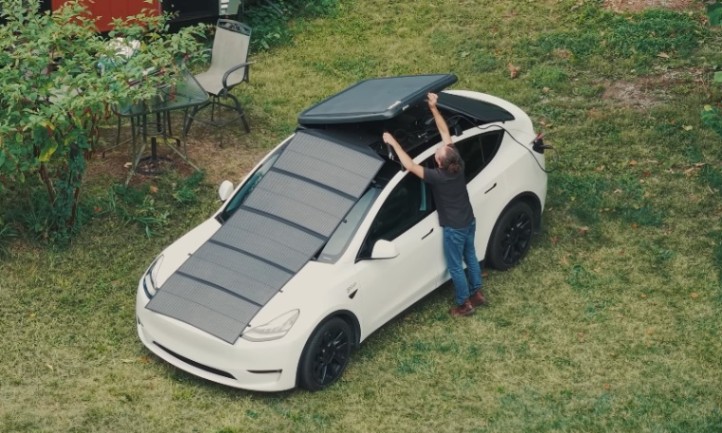
- Nissan Ao-Solar Extender: Adds a 500 W deployable array on the Sakura kei EV, generating up to 1,865 solar miles per year.
- Hyundai, Toyota, Fisker, and Mercedes: Testing similar systems for premium EVs.
While these contributions are small, they cut household energy use meaningfully. In countries with short average commutes (like Japan or the Netherlands), solar built into the car itself can offset thousands of annual kilometers.
Why it matters: Smaller solar systems at home become viable when the car contributes part of its own generation.
Technical and Regulatory Layers You Cannot Skip
Before setting up solar EV charging, several standards and rules govern interoperability and export rights.
- ISO 15118-20 Compliance: Required for true bidirectional power (V2H and V2G). Supported by Wallbox, ChargePoint, and newer European EVSEs.
- Utility Permission for Export: Even with a bidirectional charger, many utilities still restrict EV-to-grid export. Systems may operate only in “islanded” or backup mode.
- Inverter and Panel Sizing: Systems like Powerwall 3 support up to 20 kW of DC solar, but installers often limit size to maintain optimal efficiency and grid compliance.
- Tax Credits and Grants:S. federal programs still cover 30% of installation costs (up to $1,000 for EVSE hardware). Local rebates further reduce cost in California, Texas, and several EU states.
Real Costs and Payback in 2025
@wesreddy1 Home EV Charging with Solar – Here’s What You Need and What It Costs #EVCharging #SolarPower #HomeCharger #ElectricVehicle #SolarEnergy #GoGreen #EVSouthAfrica #CleanEnergy #SolarSetup #RenewableEnergy #EVLife #SustainableLiving #SolarFinance
A complete home solar EV system in the U.S. typically falls within the following range:
| Component | Typical Size | Cost (USD, 2025) | Notes |
| PV Array | 4–6 kW | 9,500–14,500 | Rooftop, Tier 1 panels |
| Smart EV Charger | 7–22 kW | 750–1,800 | Wallbox, Zappi, ChargePoint, Ohme |
| Battery (Optional) | 13–20 kWh | 12,000–18,750 | Powerwall 3, SunVault |
| Electrical Work | Upgrades, CTs, conduit | 1,500–3,000 | Higher if detached garage |
| Total | — | 23,000–35,000 | After 30% tax credit: 16,100–24,500 |
Payback Timeline
At an average grid electricity rate of $0.18/kWh and 3,500 kWh annual EV demand, pure solar charging saves about $630/year. Adding storage shortens payback during time-of-use pricing or blackout-prone regions, but most households still see ROI in 7–10 years, depending on incentives and usage.
For commercial setups, upfront costs can exceed $100,000, but total cost of ownership (TCO) remains competitive once trenching, permitting, and energy bills are considered. Beam’s EV ARC and similar products often break even within 5 years of deployment due to avoided grid costs.
What Works Best in 2025
- Best for All-Tesla Homes: Tesla Solar + Powerwall 3 + Wall Connector. Seamless integration, DC coupling, and unified app experience.
- Best Premium Flexibility: SunPower Equinox + SunVault + Third-Party Charger. Maximum efficiency with charger flexibility.
- Best Retrofit System: Enphase IQ System. Ideal for homes already on microinverters.
- Best Budget Solar Charger: MyEnergi Zappi v3. Reliable, solar-first logic and easy installation.
- Best for Bidirectional Capability: Wallbox Quasar 2. Real V2H functionality without requiring a stationary battery.
Best Off-Grid / Mobile Use: Beam Global EV ARC. Fast deployment and fully independent from grid power.