

Working at an official BMW service center offers a high-level technical career path supported by precision engineering, advanced diagnostics, and strong global brand value.
A technician entering this environment benefits greatly from solid foundational training as well as BMW-focused certification programs.
Quality expectations are strict, so preparation must be thorough and skill development consistent.
Prerequisites: Education & Foundational Training
A solid educational base forms the starting point for anyone planning to work inside an official BMW service environment.
Strong knowledge gained in school creates the structure needed for advanced brand-specific skills later on.
Students who invest effort early gain a clear advantage once they begin working with BMW systems, software, and diagnostic processes.
Automotive Education
A post-secondary automotive technology program provides the academic structure required for BMW-level work.
Instruction offered at accredited schools introduces the mechanical, electrical, and diagnostic fundamentals needed before advancing toward brand-focused training.
Programs with strong reputations often emphasize strict attendance, structured lab work, and high academic standards.
Information below highlights key elements instructors expect students to complete:
- Accredited coursework covering engine operation, electrical theory, braking systems, suspension components, and diagnostic methods
- GPA at or above 3.0 for BMW STEP applicants
- Attendance typically held at 95 percent or higher
- Strong work habits shown through class participation, lab performance, and testing results
High achievement during school signals that a candidate is prepared to handle BMW’s demanding standards and detailed technical expectations.
Apprenticeship or Certificate III (Australia Example)
Practical training gained through apprenticeships or Certificate III programs strengthens a student’s real-world capability.
Workshops offer exposure that cannot be gained through classroom lessons alone, making early experience extremely valuable.
Candidates gain confidence with tools, procedures, and vehicle systems long before applying for BMW-specific pathways.
The benefits associated with early hands-on practice are:
- Familiarity with professional-grade tools, lifts, and diagnostic devices
- Practice handling common repairs involving engines, wiring, and drivetrain components
- Direct supervision from experienced technicians who guide students through day-to-day tasks
- First contact with workflow habits required in a busy workshop
Essential Skills for BMW Technicians
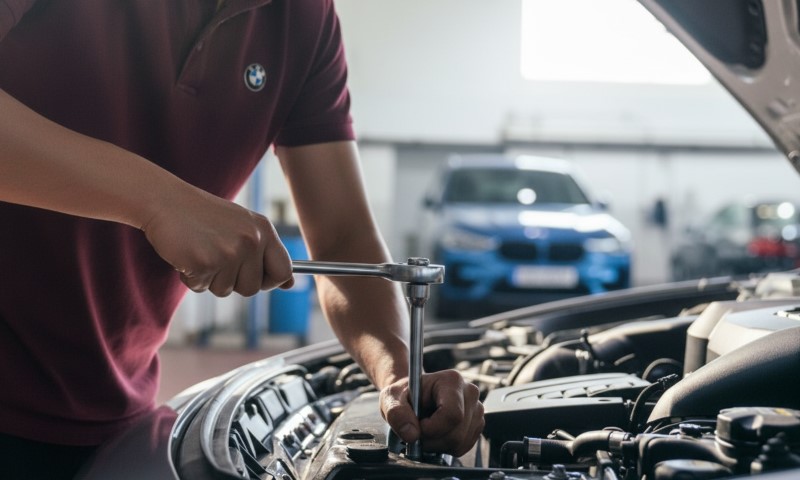
Strong competence in multiple areas is expected of anyone aiming to work on BMW vehicles.
Modern BMW models rely heavily on electronics, software-driven systems, and precise mechanical operation.
A technician must balance technical ability, with strong communication habits and disciplined work behavior.
Technical Skills
Modern BMW vehicles feature:
- Advanced engine controls
- High-voltage systems
- Complex data networks
- Sophisticated driver-assistance features
Managing these systems successfully requires consistent practice and strong diagnostic discipline.
Below are key technical abilities essential for dealership-level performance:
- Diagnostic accuracy supported by structured troubleshooting
- Confident handling of combustion engines, cooling systems, suspension parts, and braking components
- Electrical and electronic skills suited to CAN bus systems, modules, and sensor communication
- Familiarity with ISTA software, iDrive-related diagnostic menus, and BMW-specific testing tools
- Capability to interpret system data and identify hidden faults in interconnected components
Precision in technical work ensures reliable repairs and reduces repeat issues, which is critical for maintaining BMW’s service standards.
Soft Skills
Strong interpersonal skills support technicians in fast-moving workshops where communication flows between advisors, customers, and colleagues.
Clear explanations reduce misunderstanding and help create trust in the repair process.
Calm behavior and disciplined thinking guide technicians when faced with complex or intermittent issues.
Soft skills valuable inside BMW service centers include:
- Logical problem-solving during diagnostic routines
- Clear explanations suitable for customers unfamiliar with automotive terms
- Patience and attention to detail when inspecting faults or assembling components
- Adaptability during changing workloads and shifting priorities within the workshop
Successful technicians balance technical skill with professional communication and consistent customer awareness.
BMW-Specific Training and Certifications
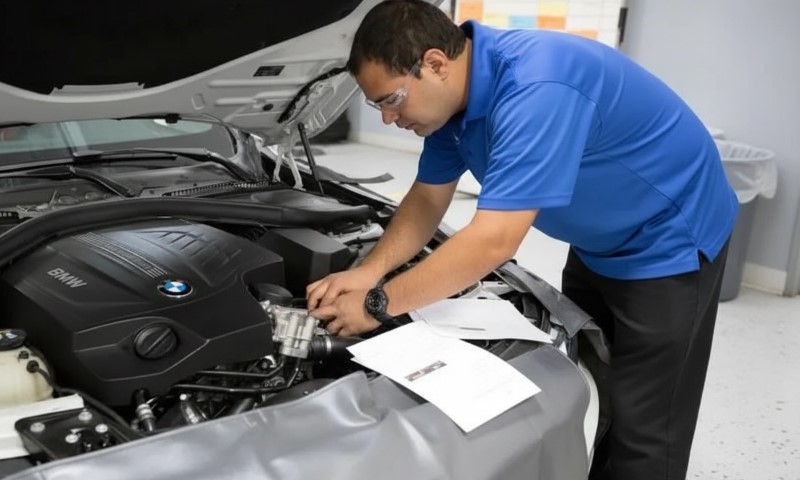
Brand-focused instruction moves students into the standards practiced inside official BMW facilities.
These programs introduce BMW systems, tools, testing platforms, and dealership workflow patterns.
Candidates who complete these programs gain a strong starting position when applying for technician roles.
BMW STEP Program (USA)
BMW STEP offers extensive advanced training after completion of an automotive school program.
Instruction ranges up to one year and prepares students for direct placement into BMW centers.
Classwork includes vehicle diagnostics, repair procedures, BMW software platforms, and safety standards.
Applicants gather several documents during the application process:
- Resumé demonstrating technical experience
- Transcript confirming grades and attendance
- Motor-vehicle record showing responsible driving behavior
- Work portfolio outlining school projects or workshop activities
Students outside the FastTrack route may also complete the BMW ASE 1 test, adding another layer of qualification.
BMW FastTrack
BMW FastTrack provides accelerated instruction aimed at individuals wanting quicker entry into dealership roles.
Focus is placed on hands-on training using late-model BMW vehicles.
Smaller class sizes create more instructor interaction, supporting faster skill development.
Training centers on:
- Real-world practice using BMW diagnostic equipment
- Repair procedures performed on current BMW platforms
- Strong workshop routines suitable for dealership environments
Graduates gain a fast transition into service center positions, with relevant skills already established.
Online and Independent Certifications
Supplementary courses accessed through third-party instructors help technicians strengthen knowledge in high-voltage safety, hybrid BMW systems, advanced diagnostics, and electronic troubleshooting.
Consistent study builds depth and prepares candidates to handle unfamiliar system faults once employed.
Benefits of additional certification include:
- Expanded capability across hybrid and electric platforms
- Safer handling of high-voltage components
- Stronger problem-solving skill for unusual faults
- Improved hiring prospects due to broader training history
Continuous education helps technicians stay aligned with modern BMW technology.
Tools and Equipment Proficiency
@autotoolpro Tools for Repair BMW Car #istad #bmwsoftware #bmwdiagnostics #bmwista
♬ nhạc nền – AUTOTOOL – CAR DIAGNOSTIC – AUTOTOOL – CAR DIAGNOSTIC
Precision repair work depends on accurate tool handling, and efficient use of diagnostic equipment.
BMW vehicles rely heavily on software-guided testing, so technicians must be comfortable with both mechanical tools and advanced electronics.
Confidence in these tools supports accurate repairs and protects vehicle components.
Skills involving equipment often require:
- Careful use of OBD2 scanners, multimeters, torque wrenches, and battery testers
- Confident operation of ISTA diagnostic software
- Ability to reprogram control units, clear fault codes, and run guided tests
- Safe use of high-voltage tools for hybrid and electric models
Correct tool handling prevents damage and supports professional standards.
Gaining Real-World BMW Experience
Work inside independent European repair shops gives technicians early exposure to BMW models, without the pressure of dealership environments.
Experience gained through varied repairs improves adaptability and confidence before joining official centers.
Workshop challenges help shape skill accuracy, and prepare candidates for service center expectations.
Key advantages gained through real BMW work include:
- Familiarity with older E-series models as well as newer platforms
- Experience with M models requiring performance-focused repair accuracy
- Exposure to recurring BMW-specific issues that appear during daily servicing
- Practice gained in solving problems that do not follow textbook patterns
Aspiring technicians can also explore different live automotive jobs listings to find entry-level or transitional roles that offer direct workshop exposure – further supporting the journey toward a BMW dealership career.
Final Thoughts
An ideal preparation path begins with accredited automotive education, continues through hands-on practice, and progresses into BMW-specific certification.
Strong technical capability, precise communication habits, and disciplined work practices create a technician fit for BMW’s professional environment.
Consistent training and real workshop exposure sets candidates up for long-term success in official service centers.