
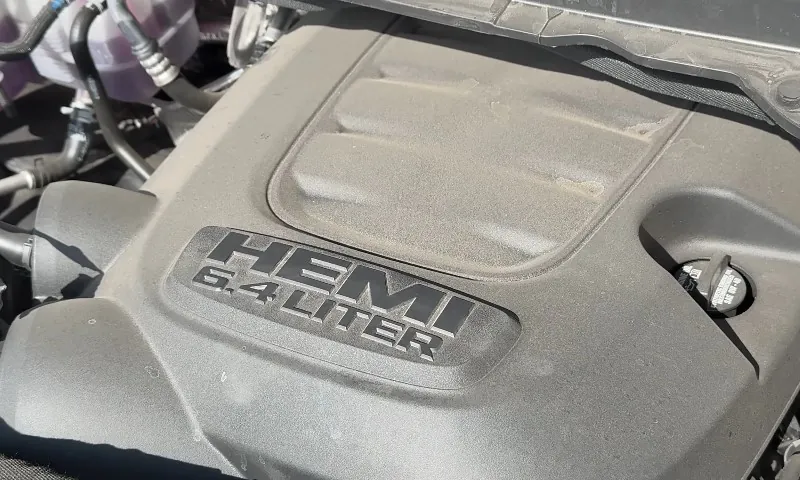
The 6.4L Heavy Duty HEMI used in Ram 2500 and 3500 trucks has earned a reputation for steady, predictable power when the truck is actually worked. Owners who tow, plow, idle on job sites, or run PTO equipment usually praise how the engine delivers torque without drama.
At the same time, modern hardware like cylinder deactivation, variable valve timing, and tight PCM control means a certain pattern of complaints keeps repeating across model years.
Most of those complaints do not start with broken parts. They start with calibration behavior, oil control details, fuel quality, and maintenance timing. When those factors line up poorly, the engine sends signals that feel expensive or alarming, even when the fix turns out to be straightforward.
Today, we prepared a diagnosis-first breakdown of the most common 6.4L HEMI problems seen in Ram HD trucks, along with fixes that are genuinely easy when the root cause is identified early.
Key Points
- Most 6.4L HEMI complaints trace back to PCM calibration, not failed hardware, with software updates often resolving noise, shudder, and warning messages.
- MDS-related drone, shudder, or clunks during light throttle are usually calibration and control issues, not transmission or engine damage.
- Oil spec, oil level, and fuel quality directly influence noise, drivability, and warning messages, making maintenance errors a common trigger.
- Early diagnosis focused on software status and basic service prevents unnecessary parts replacement and costly misdiagnosis.
A Quick Design Snapshot That Explains Many Symptoms
Ram has used the 6.4L Heavy Duty HEMI with Multi-Displacement System in HD pickups and chassis cabs for years.
Earlier industry coverage commonly lists output at 410 hp and 429 lb-ft. More recent Ram performance pages list 405 hp with 429 lb-ft, depending on model year and calibration. That horsepower variation alone hints at how much software influences engine behavior.
MDS matters because it switches the engine between 8-cylinder and 4-cylinder operation during light-load cruising. Oil pressure, solenoid control, and PCM logic all have to agree before a transition happens.
When drivers notice drone, shudder, or odd clunks at steady throttle, MDS behavior often sits at the center of the story.
Key factory specifications show up again and again during troubleshooting. Keeping them in mind helps separate real mechanical issues from calibration-driven behavior.
| Item | Factory spec on Ram 2500/3500 6.4L | Why it matters |
| Engine oil | SAE 0W-40 full synthetic meeting MS-A0921 | Wrong viscosity or spec can worsen noise, oil control, and drivability |
| Oil capacity | 7 qt with filter | Overfill and underfill both create misleading symptoms |
| Coolant | Mopar OAT 10-year / 150,000-mile formula | Mixing coolants or ignoring leaks leads to overheating cascades |
| Fuel | 87 octane, up to 15% ethanol, no E-85 | Knock and hesitation often trace back to fuel quality |
| Spark plugs | Mileage-based replacement interval | Misfires under load often follow overdue ignition service |
High-Frequency Exhaust Noise Right After a Cold Start
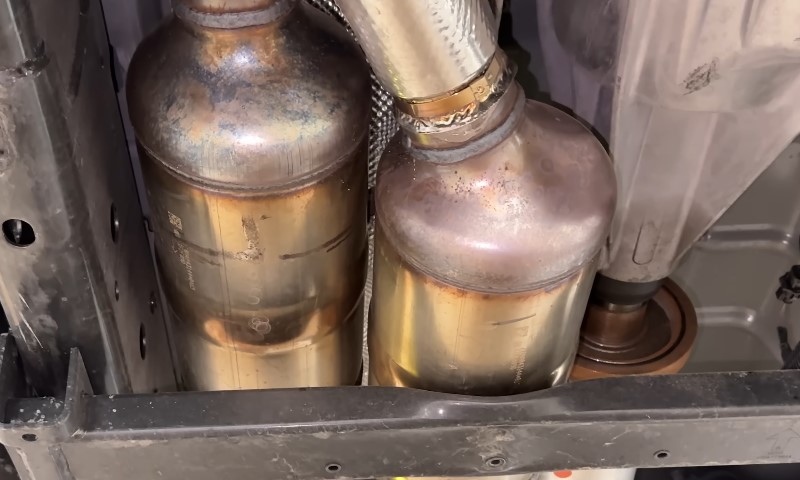
A sharp, buzzy exhaust note right after firing up a cold 6.4L HEMI can catch owners off guard, like 5.7-liter HEMI engine used in Ram 1500 model.
The sound often fades within minutes, but it raises immediate questions about whether something is actually wrong or simply part of how the engine behaves at startup.
What Owners Usually Hear
A sharper, higher-pitched exhaust note or buzzy idle sound during cold start. The noise often fades as the temperature stabilizes.
Why It Happens
For many trucks, FCA attributes the behavior to PCM software. A Ram HD service bulletin covering the 6.4L V8 Heavy Duty HEMI MDS lists “high frequency exhaust noise at idle after cold start” as a customer symptom and identifies PCM calibration as the cause. The prescribed repair is a PCM reflash to the latest software.
Easy Fix Checklist
- Ask the dealer to check PCM update eligibility for the specific VIN.
- Describe the condition clearly: cold start, idle only, duration until warm.
- Mention frequent idling or towing, since related bulletins often overlap.
When Software Is Not the Answer
If the sound continues at warm idle, shows up alongside misfire codes, or comes with a strong exhaust smell under the hood, a mechanical inspection belongs next in line.
MDS Shudder, Drone, or Clunk During Light Throttle
Light throttle cruising should feel smooth and predictable, especially in a heavy-duty truck built for steady work.
When vibration, drone, or a dull clunk shows up during gentle acceleration or coasting, the cause often traces back to how the engine manages cylinder deactivation rather than a failing hard part.
What Owners Report
- Drone or vibration at steady cruise
- Shudder or pulsation under light throttle
- A clunk sensation during coasting or gentle acceleration
Why It Happens
Multiple FCA bulletins focus on MDS-related complaints. One bulletin for 2018 Ram HD trucks with the 6.4L describes an optional software path aimed specifically at customers reporting drone, shudder, or vibration during MDS operation.
Another bulletin for later model years addresses MDS transition behavior that can feel like a transmission clunk under light throttle.
Easy Fix Checklist
- Treat the concern as a software question first. Ask whether a calibration path aimed at MDS noise applies to your truck.
- Make the symptom reproducible. Light throttle, steady speed, slight grade, unloaded versus towing all help narrow it down.
- Avoid parts replacement until software status is confirmed.
A practical observation helps here. Many low-speed and light-throttle complaints that feel transmission-related turn out to be powertrain coordination issues handled by the PCM.
PTO Disable, “Hot Oil” Messages, or Slow High-Idle Ramp
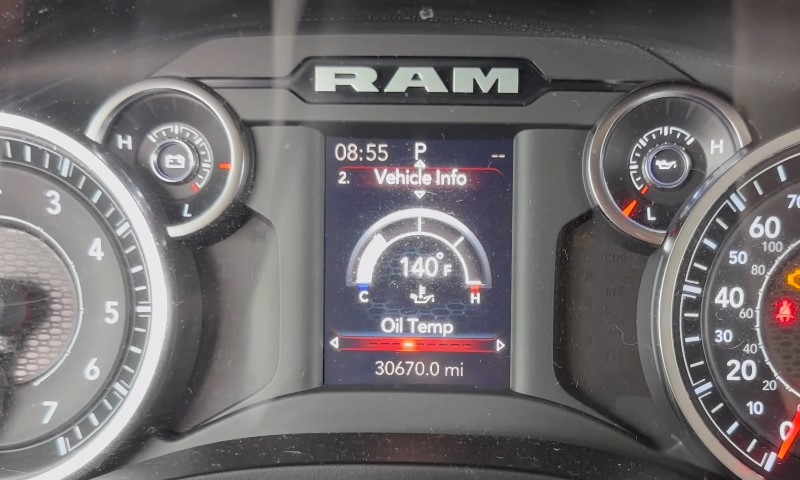
PTO-related complaints on the 6.4L HEMI often catch owners off guard because they show up during idle or light-duty operation rather than hard driving.
Warning messages, unexpected shutdowns, or sluggish high-idle response usually point to how the engine manages heat and control logic, not immediate hardware failure.
What Owners Report
- “Hot Oil” message during high idle or PTO use
- PTO disabled due to high engine oil temperature
- Slow ramp into PTO idle or exit after 10 to 30 minutes
Why It Happens
Several FCA bulletins for the 6.4L Heavy Duty HEMI list oil-temperature messaging and PTO behavior as calibration-driven.
One bulletin for 2022 Ram HD trucks ties hot-oil messages, PTO exit, and cold-start exhaust noise to PCM software. Another bulletin for 2021 trucks again identifies PCM calibration as the cause for PTO disable events.
Easy Fix Checklist
- Confirm the truck runs the latest PCM calibration for the VIN and symptom set.
- Verify oil choice and level. The spec calls for SAE 0W-40 full synthetic meeting MS-A0921, with a capacity of 7 qt including the filter.
- Match operation to reality. Long stationary PTO use generates heat even without external load, so airflow and calibration both matter.
MIL With P1404 or P0456 Plus Low-Speed Hesitation
View this post on Instagram
A check engine light paired with hesitation at low speeds often points to a control issue rather than a failing hard part.
When codes like P1404 or P0456 appear alongside surge or bump during gentle driving, the engine is reacting to how systems are being managed, not breaking down outright.
What Owners Report
- Check engine light
- Hesitation or surge at low speed
- A bump around 10 to 15 mph
- Abrupt gear engagement during PTO operation
Why It Happens
An FCA bulletin covering Ram HD trucks equipped with the 6.4L lists DTC P1404 and P0456 along with drivability complaints like low-speed hesitation and PTO engagement behavior.
The bulletin states PCM software as the cause and calls for a PCM reflash. It also notes that P0456 requires a specific small-leak verification test before any parts replacement.
Easy Fix Checklist
- Avoid throwing EVAP parts at P0456 before running the verification test.
- Update PCM software first when the symptom list matches the bulletin.
- Recheck codes after the update to see what remains.
Ticking or Knocking Noises That Sound Worse Than They Are
“Hemi tick” gets used as a catch-all phrase, but separating fuel and oil issues from real mechanical trouble saves money and stress.
Fuel-Related Knock or Hesitation
Owner manuals spell out fuel guidance clearly. Poor-quality gasoline can cause hard starting, stalling, and hesitation.
The recommended fuel is 87 octane with up to 15% ethanol, and E-85 is not approved. The manual also warns that using lower-than-recommended octane can cause engine failure and may affect warranty coverage.
Easy Steps
- Run a fresh tank from a high-turnover station.
- Stick to the specified octane and ethanol limits.
- Document knock under load rather than dismissing it as normal noise.
Oil-Related Valvetrain Noise
The 6.4L specification calls for SAE 0W-40 full synthetic meeting MS-A0921 and discourages oil additives. Oil filter replacement is required at every oil change.
Easy Steps
- Verify oil level on a consistent routine.
- Use the specified oil and a quality filter.
- Perform an immediate oil change if the maintenance history remains unknown.
When the Noise Is Not Benign
A persistent warm-idle tick combined with misfires, roughness, or power loss moves the issue out of easy-fix territory. Scan data and cylinder contribution checks belong next.
Misfires and Rough Running Tied to Ignition Maintenance
The 6.4L uses 16 spark plugs, and ignition service timing matters more than many expect. Ram HD maintenance schedules list spark plug replacement as a mileage-based item.
What Owners Notice
- Rough idle
- Slight miss under load
- Reduced fuel economy
- Intermittent misfire codes
Easy Fix Checklist
- Confirm spark plug replacement matches the mileage schedule.
- Keep fuel additives in check. Some additives reduce spark plug life and emissions performance.
- Use a dry, non-oiled engine air filter as specified.
Symptom-To-Fix Matrix for Quick Decisions
| Symptom | Likely category | Best first move |
| Cold-start exhaust buzz | PCM calibration | Check PCM flash eligibility |
| Light-throttle drone or shudder | MDS behavior | Ask about MDS noise software |
| PTO disabled, hot-oil message | Calibration and operation | PCM update, verify oil spec |
| P1404 or P0456 with surge | Calibration plus verification | PCM update, run leak test |
| Knock or hesitation | Fuel quality | Change fuel source, confirm octane |
| Persistent warm tick with power loss | Mechanical | Scan data and inspection |
Maintenance Habits That Prevent Repeat Issues
Using factory fluids and capacities as a baseline avoids a surprising number of complaints.
- Engine oil: SAE 0W-40 full synthetic meeting MS-A0921
- Oil capacity: 7 qt with filter
- Coolant: Mopar OAT 10-year / 150,000-mile
- Fuel: 87 octane, up to 15% ethanol, no E-85
Software updates deserve the same attention as oil changes when symptoms match known bulletin patterns. For the 6.4L Ram HD platform, FCA repeatedly ties drivability concerns, PTO behavior, and MDS transitions to PCM calibration. A reflash often becomes the cheapest repair on the truck.
Final Thoughts
The 6.4L HEMI in Ram Heavy Duty trucks rewards owners who treat calibration, oil choice, and maintenance timing as part of normal ownership rather than afterthoughts.
Many noises and behaviors that feel serious at first glance trace back to software logic or basic service details. Addressing those early keeps the engine doing what it does best: delivering reliable power under real work conditions, without unnecessary drama.