
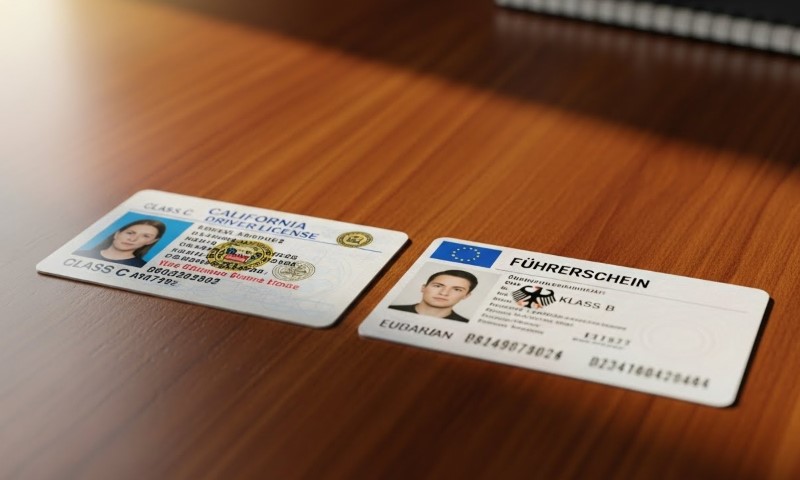
Driver licensing in Europe and the United States is built on the same basic idea, different vehicles require different levels of training and legal permission, but the way that idea is executed is fundamentally different.
Europe uses a highly standardized, tiered category system across dozens of countries.
The United States relies on a looser, state-based class system with far more local variation.
The Core Structural Difference
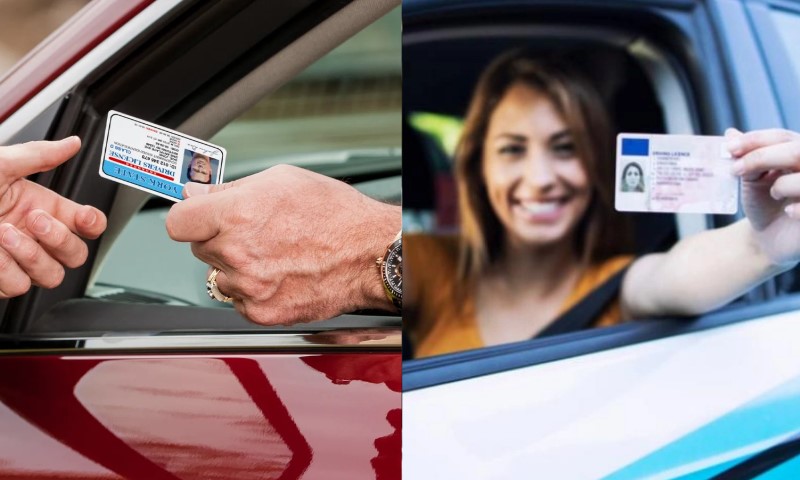
In simple terms, Europe licenses vehicles by vehicle type and weight, while the United States licenses drivers primarily by commercial versus non-commercial use, then adds endorsements for specific tasks.
In Europe, a licence category is a precise legal definition. A Category B licence allows you to drive a specific range of vehicles and nothing more. Anything outside that range requires another exam.
In the United States, most drivers hold a single non-commercial licence that covers a wide range of passenger vehicles. Special permissions are layered on only when vehicles become large, heavy, or commercial.
European Driver Licence Categories Explained
Across most of Europe, licensing follows a harmonized framework originally developed by the European Union. While training standards and costs vary by country, the licence categories themselves are consistent.
Main European Licence Categories
| Category | Vehicles Covered | Typical Use Case |
| AM | Mopeds up to 45 km/h | Scooters, small mopeds |
| A1 | Light motorcycles (up to 125 cc) | Entry-level motorbikes |
| A2 | Medium motorcycles | Progressive motorcycle access |
| A | All motorcycles | Full motorcycle licence |
| B | Cars up to 3.5 t | Standard passenger vehicles |
| BE | Cars with heavy trailers | Towing caravans, trailers |
| C1 | Trucks 3.5–7.5 t | Small commercial trucks |
| C | Trucks over 7.5 t | Heavy goods vehicles |
| D1 | Minibuses | Small passenger transport |
| D | Buses | Full passenger transport |
The key feature of this system is progression. You cannot simply jump to higher categories. Motorcycle licences, for example, often require years of experience and multiple exams. Truck and bus categories require separate theory tests, medical exams, and practical driving tests.
What a Category B Licence Really Means in Europe
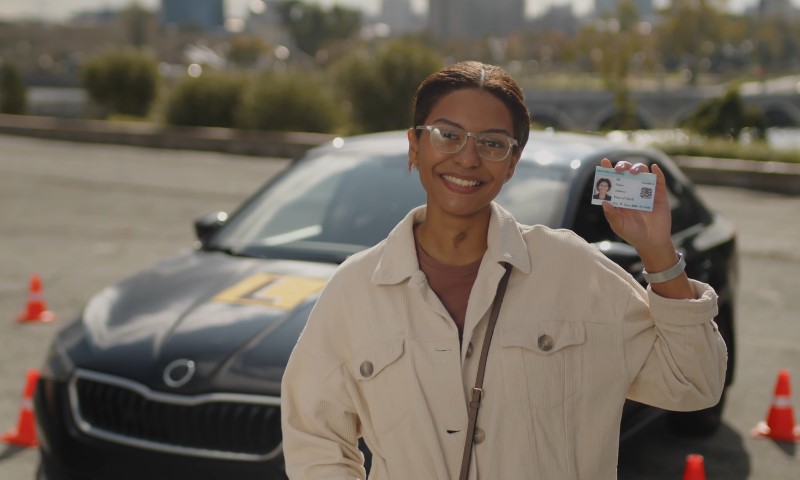
The European Category B licence is often misunderstood by American drivers. While it roughly corresponds to a standard US driver’s licence, it is more restrictive.
A Category B licence typically allows:
- Passenger vehicles up to 3.5 metric tons
- Up to 8 passenger seats (excluding the driver)
- Light trailers, with strict weight limits
Anything beyond this,larger trailers, heavier vans, or commercial transport,requires BE, C1, or C categories. This strict separation is why European drivers often hold multiple licence categories.
United States Driver Licence Classes Explained
In the United States, driver licensing is managed at the state level, but the overall structure is similar nationwide. Licences are divided into non-commercial and commercial classes.
Common US Licence Classes
| Class | Licence Type | Vehicles Covered |
| Class D | Non-commercial | Cars, light trucks |
| Class M | Motorcycle | Motorcycles |
| Class A CDL | Commercial | Tractor-trailers |
| Class B CDL | Commercial | Buses, large trucks |
| Class C CDL | Commercial | Small commercial vehicles |
Most Americans only ever hold a Class D licence. It covers passenger cars, SUVs, pickup trucks, and many vans with minimal additional testing.
Endorsements: The US System’s Key Feature

Instead of creating new licence categories for every vehicle type, the United States relies heavily on endorsements. These are add-ons to a Commercial Driver Licence that allow specific activities.
Common CDL Endorsements
| Endorsement | What It Allows |
| H | Hazardous materials |
| N | Tank vehicles |
| P | Passenger transport |
| S | School buses |
| T | Double and triple trailers |
This means two drivers with the same CDL class can have very different legal permissions depending on endorsements. Europe generally avoids this approach, preferring separate licence categories instead.
Training and Testing: A Major Cultural Difference
European driver training is extensive by design. Mandatory driving lessons, theory instruction, night driving, and sometimes highway training are required before a test can even be attempted. The cost reflects this structure and often reaches several thousand euros.
In the United States, especially for non-commercial licences, training requirements are minimal. Many states allow teenagers to qualify with relatively limited supervised driving hours. Private driving schools are common but not always mandatory.
This difference shapes driver behavior. European drivers tend to view licensing as a formal qualification. American drivers often see it as a rite of passage.
Medical Exams and Age Requirements
Medical screening is another point of divergence.
In Europe, higher licence categories such as C and D require regular medical exams, including vision and sometimes cardiovascular checks. Age limits are enforced more strictly, especially for professional drivers.
In the United States, medical certification applies primarily to CDL holders. Non-commercial drivers often renew licences with minimal health screening unless a medical issue is disclosed.
Licence Validity and Renewal
European licences usually have fixed validity periods, particularly for commercial categories. Renewals may require medical checks or proof of continued eligibility.
In the United States, renewal periods vary by state but are often longer for non-commercial licences, with fewer medical requirements.
Where Online Trade Certifications Fit Into the Licensing Gap
One detail often overlooked in Europe–US licence comparisons is how drivers prepare for specialized roles before ever touching a steering wheel. In the United States in particular, much of the theoretical groundwork for commercial driving, fleet operations, and transport safety is now delivered through online trade certifications.
These programs do not replace licensing exams, but they increasingly function as the preparatory layer that formal licensing systems leave open.
For aspiring commercial drivers, logistics workers, or fleet supervisors, online certifications cover subjects such as DOT compliance, hazardous materials awareness, defensive driving theory, and transport safety management. This approach aligns well with the US endorsement model, where legal permission is modular and knowledge-based credentials can be acquired separately from road testing.
The practical effect is that an American driver may arrive at a CDL exam already holding multiple trade certificates that employers value, while a European driver typically demonstrates equivalent knowledge through the licence process alone.
Neither path is inherently superior, but the presence of online trade certifications reflects a broader US tendency to separate education, licensing, and employment signaling into distinct steps rather than a single unified process.
Can Licences Be Exchanged Between Europe and the US?
View this post on Instagram
Licence exchange is possible in some cases, but it is not automatic.
European drivers moving to the United States may be able to exchange a licence depending on state agreements, but motorcycle and commercial privileges are often excluded.
American drivers moving to Europe frequently need to retake exams, especially if they want anything beyond a basic Category B licence.
Why the Systems Feel So Different
Europe prioritizes precision and progression. Each vehicle class is treated as a distinct skill set with formal certification.
The United States prioritizes access and flexibility. Most drivers are licensed broadly, with specialization introduced only when vehicles become commercial or high-risk.
Neither system is inherently better. They reflect different legal traditions, infrastructure realities, and cultural attitudes toward driving.
Bottom Line
European driver licences are category-driven, tightly regulated, and progression-based. US licences are class-based, state-managed, and endorsement-driven.
For everyday drivers, the American system feels simpler. For professional transport, the European system offers clearer boundaries and standardized expectations.
Understanding these differences helps drivers navigate international moves, employers assess qualifications, and policymakers compare road safety frameworks without oversimplification.